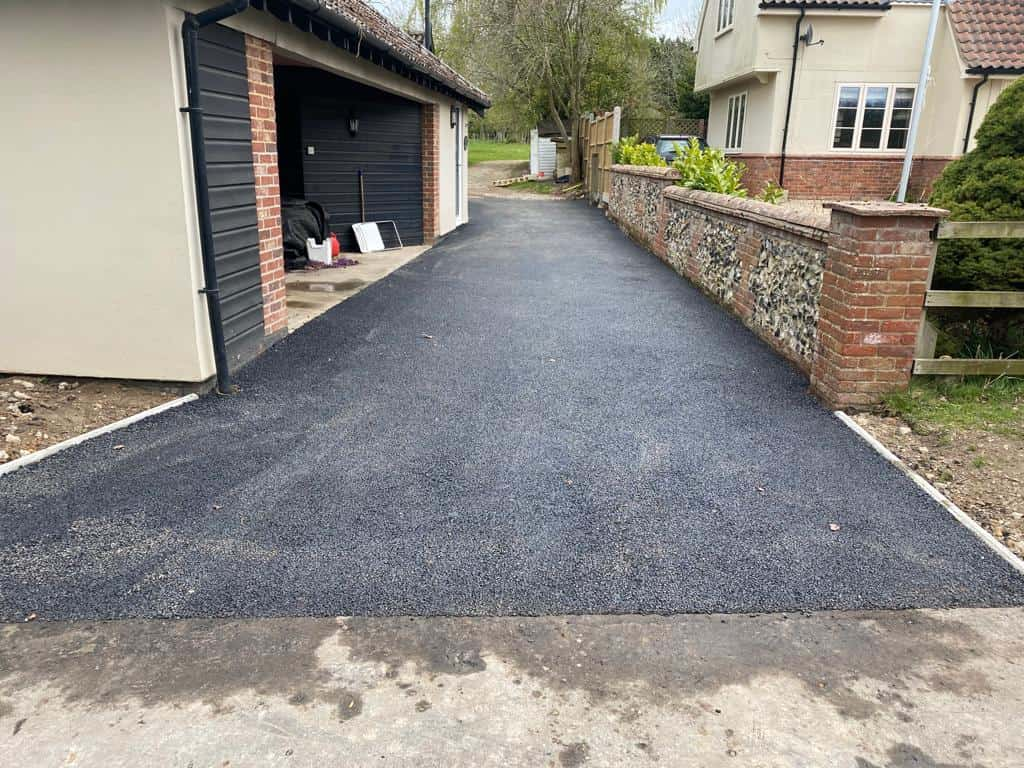
Why Should Businesses Investigate Recurring Tarmac Cracks?
Cracking is one of the most recognisable signs of deterioration in a tarmac surface. A small isolated crack does not necessarily indicate extensive failure, but when cracks repeatedly return after previous attention, businesses should consider why the same problem continues to develop. Recurring cracking can indicate that movement, drainage issues, repeated loading or weaknesses beneath the visible surface have not been fully addressed.
For commercial premises in Uckfield, Kent, investigating recurring tarmac cracks can help determine whether the problem remains localised or is an early indication of wider deterioration. Rather than repeatedly treating the visible crack, a professional assessment can consider the surrounding surface and underlying conditions so that any necessary work addresses the actual cause.
Why Recurring Tarmac Cracks Deserve More Than Another Surface Repair
Tarmac surfaces used by businesses can experience demanding conditions. Cars, delivery vehicles and regular traffic may repeatedly travel over the same routes, while turning, braking and stationary loads can concentrate stress in particular areas.
Cracks can develop for several reasons, and their location, shape and behaviour often provide useful clues.
If a repaired crack repeatedly reappears, it is important to determine whether the defect is originating within the tarmac itself or being caused by movement elsewhere in the pavement construction.
A Returning Crack Suggests the Cause May Still Be Present
A repair can close a visible opening, but that does not necessarily remove whatever caused the surface to crack initially.
If the supporting layers continue moving, water continues entering a vulnerable area or repeated loading remains concentrated over a weak section, the surface can eventually crack again.
This does not automatically mean previous repair work was inappropriate. Conditions can change, and surrounding deterioration can develop over time.
However, repeated failure in the same location provides a good reason to investigate beyond the visible surface.
Crack Patterns Can Reveal Useful Information
Not all tarmac cracks mean the same thing.
One isolated line across an otherwise stable surface may require a different response from interconnected cracking spreading across a larger area. Cracks appearing around depressions can also indicate different conditions from deterioration concentrated along an edge.
A professional assessment looks at the pattern as a whole.
Useful factors include whether cracks are:
- Returning along previous repair lines
- Spreading into surrounding areas
- Joining with nearby cracks
- Accompanied by settlement
- Developing along heavily trafficked routes
- Concentrated around surface edges
- Associated with standing water
- Appearing across several separate areas
The pattern helps establish whether deterioration is genuinely isolated.
The Problem May Be Below the Tarmac
The visible surface is only one part of a commercial tarmac area.
Its performance depends heavily on the supporting construction underneath. If those layers become unstable, settle or lose suitable support, movement can eventually be transferred into the tarmac above.
In these circumstances, repeatedly repairing the surface alone may not provide a lasting solution.
The affected section may need further investigation to establish whether reconstruction or other preparatory work is required beneath the finished surface.
Heavy Vehicle Movements Can Concentrate Stress
Commercial surfaces often experience loading that differs considerably from a typical residential driveway.
Delivery vehicles, service vehicles and other traffic may repeatedly follow the same routes. Certain areas can consequently receive substantially more use than surrounding sections.
Turning areas can be particularly demanding because tyres apply forces differently when vehicles change direction.
If recurring cracks consistently develop along these high-use routes, vehicle movement should form part of the assessment.
Understanding how the surface is actually used can be just as important as examining the crack itself.
Stationary Loads Can Affect Particular Areas
Not all loading occurs while vehicles are moving.
Some commercial surfaces have designated areas where vehicles regularly stand, wait or load and unload. Repeated loading in the same location can expose weaknesses that may not be apparent elsewhere.
Where cracking repeatedly occurs around these areas, the complete pavement construction should be considered.
This helps determine whether the existing surface and supporting layers remain suitable for the demands placed upon them.
Water Can Accelerate Existing Deterioration
Cracks create potential routes through which rainfall can reach vulnerable areas beneath the tarmac.
Once water enters an already weakened section, further deterioration can develop. Vehicle movements can then place additional stress on the affected area.
The result can be a cycle in which a crack opens, water enters, the surrounding construction deteriorates and the crack returns or expands.
Preventing this progression starts with understanding why the crack is present rather than treating it purely as a cosmetic defect.
Drainage Problems Can Contribute to Repeated Cracking
Recurring cracks and poor drainage can sometimes appear together.
Standing water may indicate that part of the surface has settled or that existing levels are no longer working effectively. If the same area also contains recurring cracks, both symptoms should be considered together.
Repairing the cracks without investigating the reason water repeatedly collects nearby may leave an important contributing factor unresolved.
Professional assessment should therefore consider surface levels and drainage alongside the condition of the tarmac.
Settlement Can Produce Cracks That Keep Returning
If part of a commercial surface has dropped relative to surrounding areas, stresses can develop where the levels change.
Cracking may appear along the edges of the settled section and return even after the visible opening has been repaired.
Other indications of settlement can include depressions, uneven transitions and repeated puddling.
Where these symptoms accompany recurring cracks, treating the affected construction rather than simply filling individual openings may be necessary.
Connected Cracking Can Indicate Wider Deterioration
A crack that begins extending towards other defects deserves attention.
As several cracks join together, sections of tarmac can become increasingly separated from the surrounding surface. Vehicle movements may then cause the edges to loosen and break away.
At this stage, the issue is no longer simply one crack.
The complete affected section should be assessed to determine how much material remains stable and whether deterioration extends beyond what is visible at surface level.
Crumbling Edges Show That Material Is Being Lost
A narrow crack with stable edges is different from one surrounded by loose or fragmented tarmac.
Crumbling indicates that deterioration has progressed to the point where material is beginning to break away.
Once this happens, the opening can become larger and increasingly vulnerable to water and traffic.
For commercial surfaces receiving frequent use, early investigation can help prevent a relatively defined defect from developing into a larger broken area.
Repeated Patching Can Provide Useful Evidence
Previous repairs are part of the history of a tarmac surface.
If one repair remains stable for years, that can indicate the original issue was successfully contained. If the same section has required repeated attention, it may indicate that a deeper or wider problem needs investigation.
Businesses should therefore consider not only where cracking exists today but where repairs have previously been carried out.
A concentration of old patches and renewed cracks within one area can provide useful information about how deterioration has progressed.
Potholes Can Develop Where Cracking Is Ignored
Cracking does not automatically become a pothole, but interconnected cracks and deteriorating edges can eventually allow pieces of material to loosen.
Repeated vehicle movements can accelerate this process.
Once material begins breaking away, the resulting defect can become progressively larger as the surrounding edges are exposed to further traffic and weathering.
Investigating recurring cracking before substantial material is lost can provide more options for dealing with the affected area.
Localised Failure Does Not Always Require Widespread Work
Recurring cracks should be investigated, but they should not automatically be interpreted as evidence that an entire commercial surface needs replacing.
The problem may remain concentrated within one particular area.
If the surrounding tarmac and supporting construction remain stable, localised reconstruction or another targeted approach may be suitable.
Professional assessment helps define the boundaries of the problem so that sound areas are not unnecessarily disturbed.
Wider Deterioration Requires a Different Approach
The situation changes when cracking occurs repeatedly across numerous parts of the surface.
Multiple areas of interconnected cracking, settlement, loose material and previous repairs can indicate that deterioration is no longer isolated.
In these circumstances, repeatedly addressing individual defects may become less effective because new problems continue developing nearby.
The surface should then be considered more comprehensively to determine which areas remain serviceable and which require more substantial attention.
Commercial Surfaces Should Be Assessed Around How They Operate
A useful assessment considers more than the material itself.
Understanding the day-to-day use of the site can help explain why particular areas deteriorate faster than others.
Vehicle routes, turning points, loading areas, parking arrangements and drainage patterns can all influence performance.
This information allows any proposed work to respond to the actual conditions the surface experiences rather than viewing every crack as an identical defect.
Early Investigation Can Help Preserve Sound Areas
One advantage of investigating recurring cracks promptly is the opportunity to identify deterioration before it spreads further.
If a weakness is still confined to a particular section, addressing that area may help protect the surrounding surface.
Allowing cracking, water penetration and material loss to continue can make the boundaries of the affected area progressively larger.
For businesses, monitoring the condition of frequently used tarmac areas can therefore be an important part of sensible surface maintenance.
Professional Assessment Helps Identify the Appropriate Solution
Recurring cracks require diagnosis rather than assumptions.
At Uckfield Driveways, we assess commercial tarmac surfaces in Uckfield, Kent by considering the location and pattern of cracking alongside settlement, drainage, previous repairs and the way vehicles use the area.
This helps establish whether targeted repair is appropriate or whether the affected section requires more extensive preparation or resurfacing.
The objective is to address what the surface genuinely requires rather than repeatedly covering a symptom while the underlying cause remains.
Conclusion
Businesses should investigate recurring tarmac cracks because repeated failure can indicate that the original cause extends beyond the visible surface. Movement within supporting layers, settlement, water ingress, drainage problems and concentrated vehicle loading can all contribute to cracks returning after previous attention.
The important distinction is between an isolated defect and evidence of wider deterioration. A professional assessment can identify the likely cause, determine how far the problem extends and establish whether targeted repair or more comprehensive work is appropriate.
If cracks continue returning across a commercial tarmac surface in Uckfield, Kent, contact Uckfield Driveways. We can assess the affected area and recommend an appropriate approach based on the condition of the surface and how it is used.
Call us on: 01825 705 496
Click here to find out more about Uckfield Driveways
Click here to complete our contact form and see how we can help with your driveway needs.